In a world where data drives every decision, organizations face a paradox: they have more data than ever, yet trust in that data has never been lower. Data quality and governance aren't just IT concerns—they're business imperatives that determine whether your analytics deliver insights or illusions.
"Bad data costs the average organization $12.9 million per year. For healthcare organizations, the costs extend beyond money to patient safety."
The Hidden Cost of Poor Data Quality
Poor data quality undermines decision-making, causes operational errors, and creates compliance risks. Without governance, data becomes inconsistent, duplicated, and untrustworthy. The symptoms are everywhere—reports showing conflicting numbers, duplicate records causing billing issues, and compliance violations from ungoverned sensitive data.
Conflicting Reports
Different systems show different numbers, eroding trust in analytics and causing endless debates about "which report is right."
Duplicate Records
Duplicate customer and patient records cause service issues, billing errors, and potentially dangerous situations.
No Data Lineage
When quality issues are discovered, there's no way to trace errors back to their source or understand downstream impact.
No Accountability
Without clear data ownership, quality issues persist indefinitely with no one responsible for resolution.
Our Approach: Building a Culture of Data Trust
We implement comprehensive data quality and governance programs that establish standards, automate validation, and create accountability. Our approach treats data as a strategic asset, not just a technical artifact.
Data Quality Assessment
Profile data across all sources to identify quality issues, patterns of errors, and root causes. Establish baseline metrics for each quality dimension.
Quality Framework Design
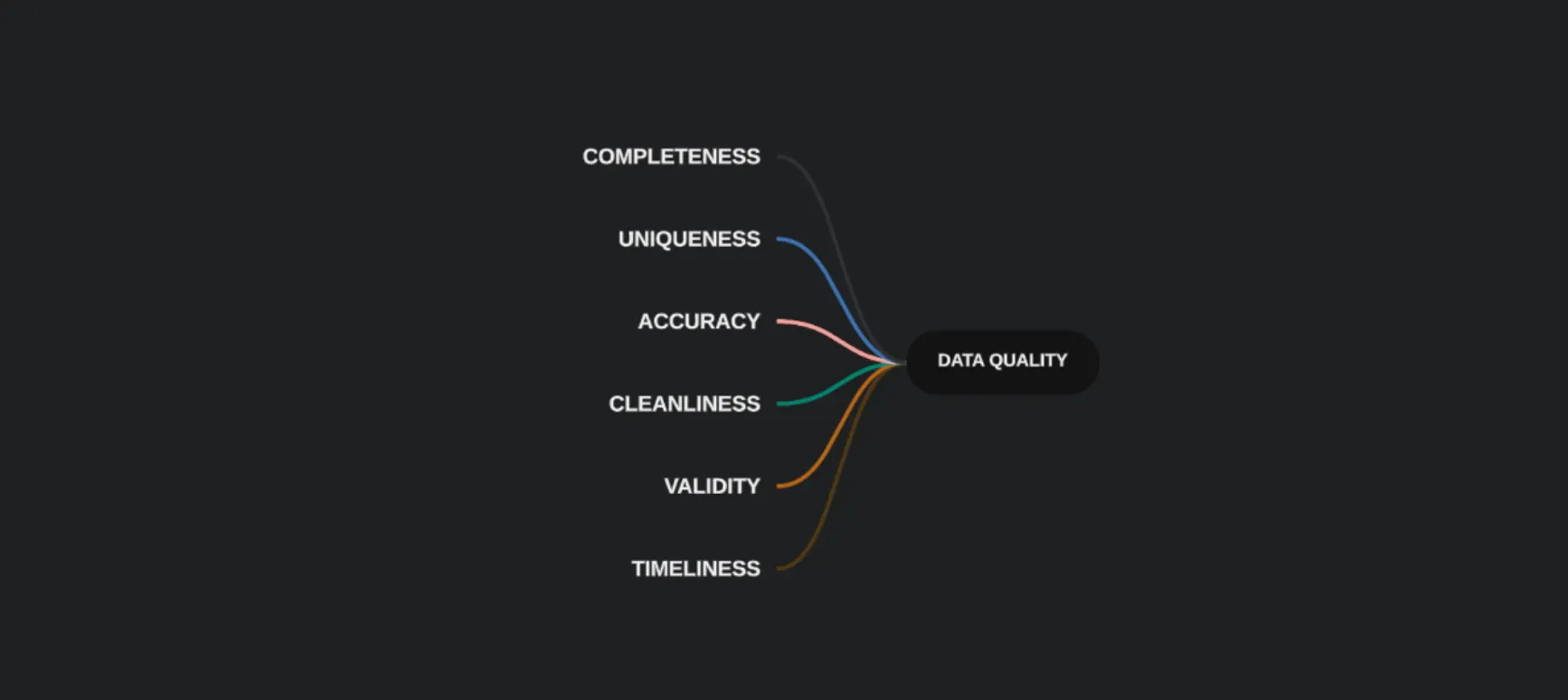
Define quality dimensions (accuracy, completeness, consistency, timeliness), metrics, and SLAs tailored to your business criticality.
Automated Validation
Implement quality checks at ingestion and transformation points. Catch issues at the source before they propagate through your data ecosystem.
Master Data Management
Establish golden records with matching and merging rules. Create single sources of truth for customers, products, and other critical entities.
Governance & Monitoring
Define policies, ownership, and stewardship roles. Deploy real-time quality dashboards and alerting to maintain standards continuously.
Healthcare Network Achieves Patient Safety Through Data Quality
The Situation
A major hospital network with multiple facilities discovered a critical problem: 12% duplicate patient records were causing wrong-patient alerts, delayed care, and potential safety issues. With no data governance program in place, they had 8 different definitions of "active patient" across departments, making coordination nearly impossible.
Our Solution
We implemented a master patient index (MPI) with sophisticated fuzzy matching algorithms that could identify duplicates even with variations in names, addresses, and birth dates. We created data quality scorecards for each source system and established a data governance council with defined ownership for each data domain. Automated quality monitoring with Monte Carlo provided continuous visibility into data health.
"We went from multiple daily wrong-patient alerts to zero. Beyond the liability protection, we've fundamentally improved patient safety and care coordination. The governance program gave us accountability we never had before."
Benefits of Data Quality & Governance
A well-implemented data quality and governance program transforms data from a liability into a competitive advantage. Here's what organizations typically achieve:
Trusted Data
Confidence in accuracy and consistency of critical data across all systems and reports.
Better Decisions
Eliminate "garbage in, garbage out" analytics. Make decisions based on data you can trust.
Operational Efficiency
Reduce manual data cleanup and rework that wastes countless hours every week.
Compliance Assurance
Meet GDPR, CCPA, HIPAA, and other regulatory requirements with confidence.
Cost Reduction
Prevent costly errors and rework caused by bad data throughout the organization.
Single Source of Truth
Consistent definitions across the organization eliminate conflicting interpretations.